
The Dish with One Spoon is a concept used in treaties to encourage cooperation and mutual respect, signifying the ideal relationship between humans and nature. The concept is largely attributed to the Anishinaabe and Haudenosaunee peoples, but has been used by others. The “dish” signifies the land that should be peacefully shared, and the “spoon” is used about the land’s inhabitants who should use its resources respectfully and cooperatively. It is understood that the Dish with One Spoon signifies both the importance of maintaining peaceful and equal relations with both the environment as well as other nations, only taking what you need and always contributing back to the dish after taking from it.
History
Although created and used for hundreds of years by Indigenous groups, the dish with one spoon began being referenced in treaties in the early 16th century. This occurred when tensions were exacerbated when European settlers came in the 1600s. The fur trade became more appealing to Indigenous nations around the St. Lawrence River. This fuelled hostility between the Algonquin and Haudenosaunee due to disputes over territories for hunting, particularly for beavers. The Algonquin were backed by French settlers invested in the fur trade. Known as the Beaver Wars, fighting broke out between the Haudenosaunee and the French in 1628, and continued for decades. After a long and costly war, all parties wanted to achieve peace. In 1700, the Haudenosaunee representatives met with the governor of Montreal and scheduled a meeting in the summer of 1701. They called for all allied nations of the French and the five nations of the Haudenosaunee to agree to a peace treaty.
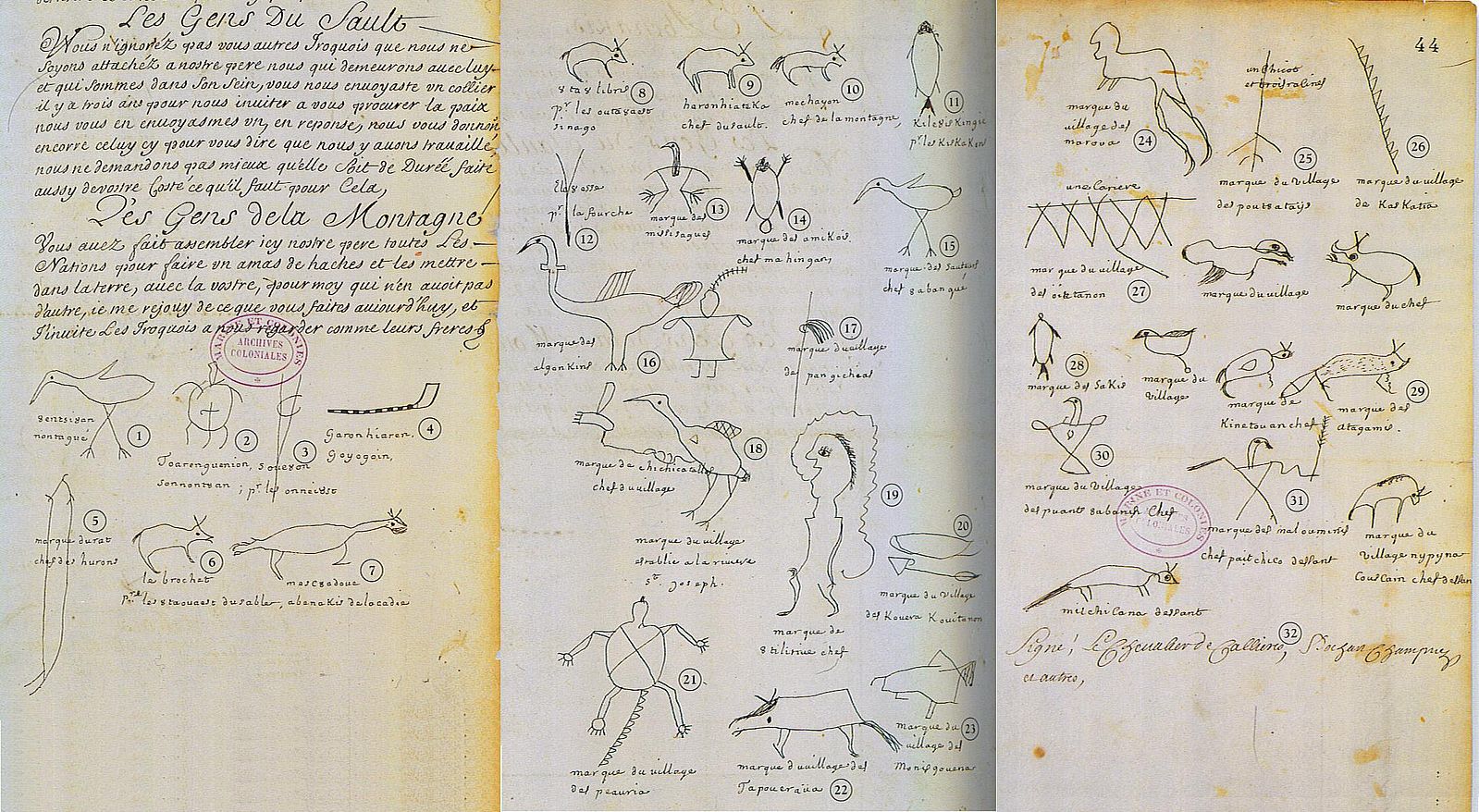
In 1701, the Great Peace of Montreal was established in negotiations between 10 Indigenous nations and the French. These negotiations were led by French Governor Louis-Hector de Callière under the principles of a Dish with One Spoon. Groups set hunting boundaries with one another; and addressed the over-hunting of beavers to avoid famine, and to allow continued participation in the fur trade. To signify the signing of the treaty, groups exchanged Wampum belts, meticulously beaded sashes often exchanged after a treaty to symbolize the agreement. Notably, the Iroquois gave Callière four belts, including at least some representations of the Dish with One Spoon.
Later and Contemporary Use
The success of the Dish with One Spoon is evident in that it worked to maintain peace between Indigenous nations, particularly the Anishinaabe and Haudenosaunee, and ended the Beaver Wars. The treaty’s focus on shared hunting grounds and resources was crucial in preventing European settler and intertribal conflicts in the Great Lakes region. Over time, commitments to the Dish with One Spoon have been reaffirmed and referenced in various councils and meetings held by Indigenous leaders. As European colonization intensified and different colonial powers came and went, Indigenous nations have continued to invoke the Dish with One Spoon principle to assert their rights to the land and resources.
By the 20th century, the landscape had changed significantly. The historical agreements, observed by the French and English, were largely neglected by the new Canadian and American governments. They authorized laws limiting Indigenous hunting and fishing, contradicting the principles of the Dish with One Spoon. Indigenous leaders’ protests and petitions have been disregarded, and state authorities took actions against Indigenous hunters and fishermen. Wampum belts, symbolizing their historical agreements, were hidden in private collections or displayed in museums. The legal and political significance of these treaties was overshadowed by non-Indigenous laws and regulations (Lytwyn, 1997).
The Dish with One Spoon continues to be a symbol for understanding a collective approach to living together and a model for environmental conservation, community cooperation, and the respectful sharing of resources. It is frequently cited in land acknowledgements, and discussions about Indigenous rights, land sovereignty, and environmental stewardship, and in doing so, raises awareness about the shared responsibility for the land’s well-being and the importance of mutual respect. Referencing the Dish with One Spoon in land acknowledgements, however, particularly for non-Indigenous Canadian institutions and organizations, has been critiqued for presenting a narrative that suggests that Indigenous communities willingly agreed to share their land, and that there was an agreement of some kind of giving up land for potential “ownership” by the Canadian state and settlers. This misrepresentation involves a misinterpretation and oversimplification of the Dish With One Spoon’s complexities, deviating from a true understanding of its historical context and enduring principles.
Additional resources:
- A helpful article from the Bayfield Historical Society on Dish with One Spoon
- Wampum Bear archive with images and histories of different wampum belts
- Dish with One Spoon from the Canadian Encyclopedia
- An oral history video on Dish with One Spoon
Contributors: Brooke Sacobie-Collicott, Jaiba Amin, Hajer Elghamudi, Isabella Mastrotto, Caitlin Rose McGinty
 Welcome to Canadian Politics
